
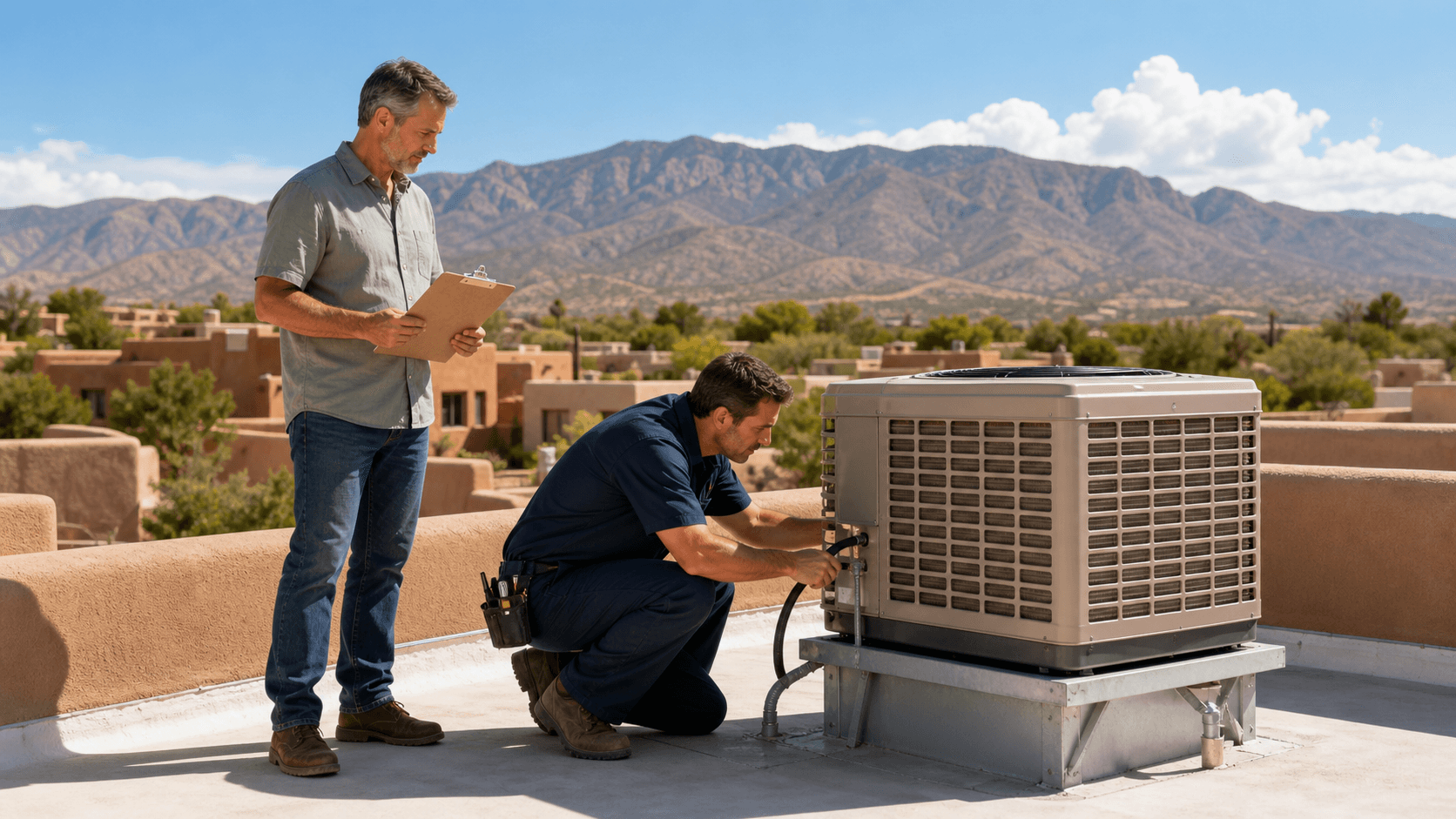
Stop Sweating Monsoon Season Before It Starts
A swamp cooler that quits on a hot, sticky afternoon in Albuquerque can turn any home or business into a sauna fast. The air feels heavy, the cooler is blowing warm, damp air, and everyone is uncomfortable. When that happens near the end of monsoon season, it is natural to wonder if a quick repair is enough or if it is time for a bigger change.
Late monsoon and early fall might not feel like the peak cooling season, but it is actually one of the best times to think hard about your system. Humidity shows every weakness in an evaporative cooler. At the same time, cooler nights remind you that shutdown is coming soon. As a local HVAC and plumbing company, we care about helping people make smart choices about swamp cooler repair in Albuquerque so you are not stuck with the same headache again next year.
How Monsoon Weather Wrecks Swamp Cooler Performance
Swamp coolers work great in our usually dry air. They pull hot outdoor air through wet pads, and as the water evaporates, the air temperature drops. When the air is dry, the water can evaporate easily, so the cooler can lower the temperature and keep things comfortable.
Monsoon humidity changes the game. The air already holds a lot of moisture, so it cannot absorb as much from the pads. That means less evaporation and less cooling. On top of that, several problems tend to show up at the same time.
Common monsoon-related issues include:
- Pads that stay soggy instead of drying between cycles
- Extra mineral and dirt buildup from rain, dust, and roof run-off
- Fan motors that work harder in heavy, muggy air
- Musty or sour smells from standing water in the pan
These problems often show up right as daytime temperatures start to ease. It can be tempting to ignore them and think, "We are almost done using it anyway." But leaving a swamp cooler in bad shape through the winter can make next spring a mess. Motors sit with moisture on them, pans corrode, and mineral buildup turns hard and stubborn.
Fixing or checking issues before shutdown helps you avoid:
- Rusted-out pans and cabinets
- Frozen and cracked water lines in cold snaps
- Mold or algae growth in leftover water
When a Simple Swamp Cooler Repair Makes Sense
Not every problem points to replacement. Many swamp coolers just need basic repair and good maintenance to keep going. If the unit is in decent shape overall, and you have not been calling for service over and over, a targeted repair may be the smart move.
Some symptoms that usually point to straightforward repair include:
- Weak airflow when the fan or belt is worn or loose
- Small drips around supply lines or fittings
- A float valve that sticks and lets the pan overfill
- Simple electrical issues like loose connections or bad switches
In early fall, there are a few cost-effective repairs that can extend the life of a cooler:
- Changing worn or clogged pads
- Replacing a failing pump before it dies completely
- Lubricating the motor and fan shaft where needed
- Clearing drain lines so water can leave the pan fully
- Tightening wiring and checking basic controls
Getting these things done while the weather is still mild makes a big difference. The cooler can be serviced properly, then shut down and winterized. That way, when you start it again before the next hot season, you are not hit with surprises like burned-out motors, cracked lines, or a unit that will not start at all.
Signs Your Swamp Cooler May Not Be Worth Fixing
Sometimes repair is only a bandage. If your cooler needs help again and again in a single season, it may be telling you that something bigger is wrong. Age, heavy wear, and long-term water problems can all add up.
Red flags that a repair might not be worth it include:
- An older unit that has already had many major parts replaced
- Severe rust or corrosion on the cabinet, pan, or frame
- Chronic leaks on the roof or into the building
- Multiple service visits every hot season for the same issues
Rising utility bills can also be a clue. If your swamp cooler runs longer than it used to, but everyone still feels sticky or hot, it may be too small, poorly installed, or just worn out. Repeated motor or pump failures are another hint that the system is working harder than it should just to keep up.
At that point, it is worth comparing long-term costs. You can keep paying for swamp cooler repair in Albuquerque over and over, or you can think about:
- A newer, more efficient evaporative cooler with better performance
- A traditional AC or heat pump option that offers more stable comfort
- A setup that gives you better control on both dry and humid days
Looking at the big picture helps you avoid throwing money at a cooler that is near the end of its life.
Smart Off-Season Prep Before You Shut It Down
Early fall is a perfect time to get your swamp cooler ready for its break. Even if you plan to keep the same unit, how you shut it down matters for how it will start back up.
Good off-season prep usually includes:
- Cleaning mineral buildup from the pan, pads, and water lines
- Inspecting ductwork and roof penetrations for gaps or damage
- Fully draining the cooler, lines, and any roof piping
- Turning off water supply valves and power
- Properly covering or sealing the unit to keep out snow, ice, and debris
Taking care of repairs before winter also protects the unit. Fixing leaks and drainage problems now cuts down on rust and corrosion. Dealing with standing water helps keep mold and algae from growing inside the cooler while it sits unused.
A combined service and winterization visit can:
- Catch small issues before they become big failures
- Protect your roof and ceilings from slow, hidden leaks
- Set you up for a smoother startup next spring
As a local team familiar with Albuquerque's monsoon patterns and dry spells, we know how much stress swamp coolers handle every year. Pairing end-of-season repair with careful shutdown is one of the best ways to keep your system reliable for the next round of hot weather.
Restore Reliable Cooling Before the Heat Kicks In
If your cooler is struggling to keep up, Perry Mechanical is ready to help you stay comfortable with expert swamp cooler repair in Albuquerque. We will inspect your system, explain what we find, and complete only the work that makes sense for your home and budget. To schedule a visit or ask a question, simply contact us and we will follow up promptly.