
Why Landlords Are Asking About Mini Splits in Albuquerque
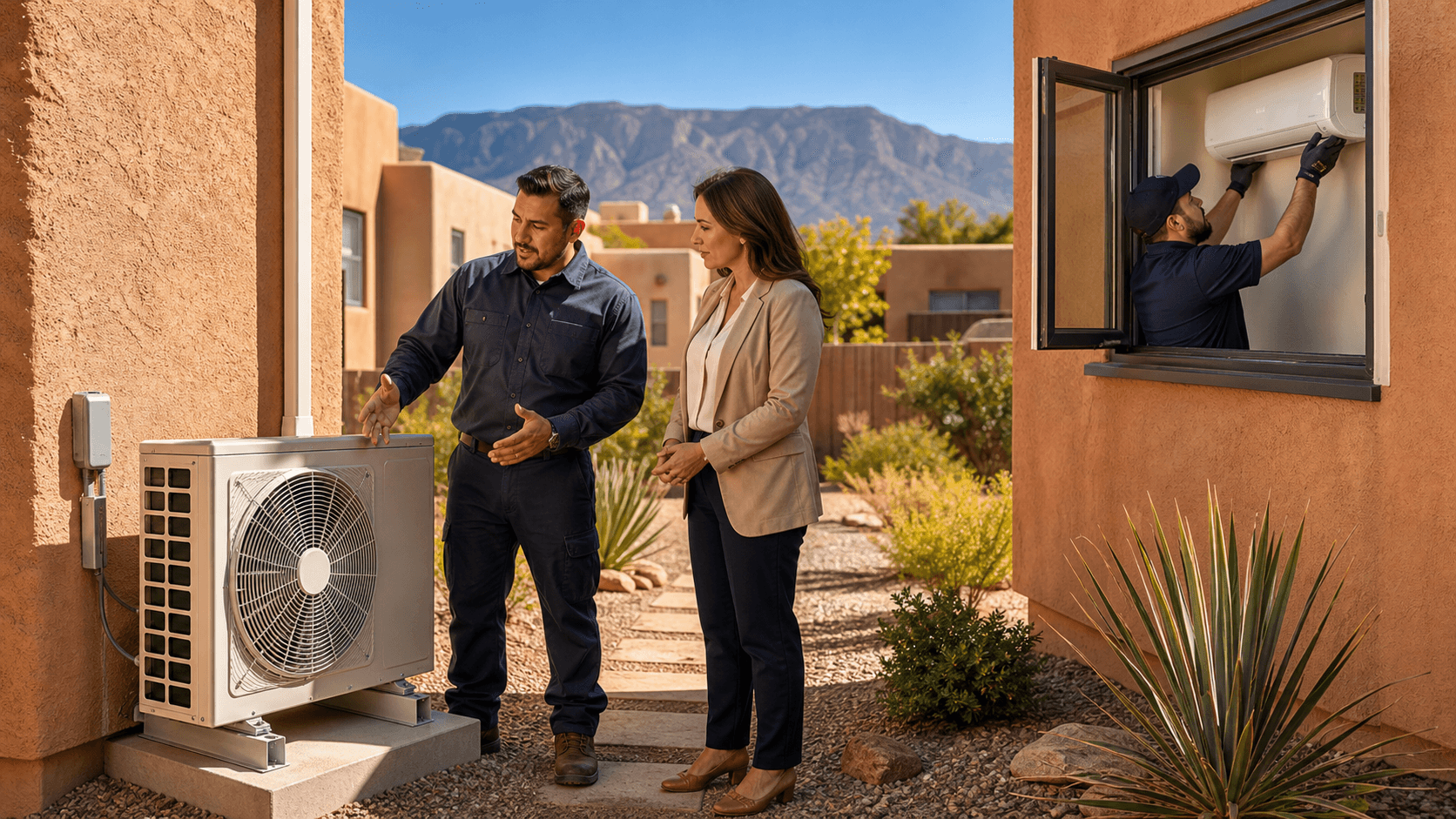
More landlords in Albuquerque are starting to question if mini split systems make sense in their rentals. Tenants want better comfort, lower bills, and quiet equipment, and that puts pressure on owners to rethink older heating and cooling setups. Mini split installation in Albuquerque rentals is coming up in lease talks, upgrade plans, and even in online listings.
Rising utility costs, aging swamp coolers, and more people working from home have all pushed this topic forward. When someone is in their apartment or casita all day, they notice every hot room and cold draft. That is where mini splits, with their zoned comfort and efficient operation, start to look interesting for rentals.
As a local HVAC and plumbing company, we work with New Mexico homes and small businesses every day. We see what our dry climate does to equipment and how rental properties have their own set of challenges. That gives us a clear view of when mini splits help and when another option might be better.
How Albuquerque's Climate Impacts Rental Comfort
Albuquerque has hot, dry summers, cool evenings, and winter nights that can get surprisingly cold. Rentals can swing from stuffy to chilly in a single day. Tenants feel those swings, and they often show up as comfort complaints or extra wear on older systems.
Many older rentals still rely on evaporative coolers and simple electric or gas heaters. These setups can work, but they often:
- Struggle on very hot or humid days
- Leave some rooms much warmer or cooler than others
- Dry out indoor air or pull in dust and pollen
Modern heat pump mini splits can both cool and heat, which fits our climate well. Instead of one big blast of air, they provide steady, gentle conditioning that keeps rooms closer to a set temperature. Zoned control means each indoor unit adjusts to the needs of that space, not the whole building at once.
Stable indoor temperatures are not just about comfort. They also help with things like:
- Reducing stress on finishes and flooring from big temperature swings
- Keeping indoor humidity more stable
- Lowering the risk of moisture problems in closed-up spaces
For landlords, that can mean fewer middle-of-the-night calls and a better experience for long-term tenants.
Pros and Cons of Mini Split Installation in Rentals
Mini splits offer real benefits for rental properties, but they are not perfect for every building.
Some of the main advantages are:
- Zoning, so tenants cool or heat only the rooms they use
- No ductwork, which works well in older homes, casitas, or small units
- Quiet indoor operation that makes living and working from home more comfortable
- Better filtration than many window units or older systems
The ductless design can be especially helpful in:
- Older Albuquerque homes with thick walls and no existing ducts
- Garage conversions or backyard casitas
- Multi-unit buildings where running new ducts would be disruptive
There are also concerns to weigh:
- Upfront installation cost is higher than a basic window unit or swamp cooler
- Each indoor head has a filter that needs regular cleaning
- Outdoor units and linesets can be exposed in tight yards or near walkways
- Tenants might block units with furniture or misuse remote controls
For landlords, the balance comes down to property type, tenant profile, and long-term plans. A professional evaluation can look at the layout, power supply, and yard space to see if mini splits are a good match or if another approach makes more sense.
Cost, Energy Savings, and Return on Investment
Many owners start this conversation by asking about cost. There are two main parts to think about: what you pay to install the system and what it costs to run it.
Mini splits usually cost more to install than swapping in a simple window unit or replacing a swamp cooler. On the other hand, you skip the expense of adding ducts, and you often get higher efficiency and heating built into the same system. Operating costs can feel different too, since you are using electricity in a more targeted way instead of pushing one large system for the whole unit.
Energy savings often come from:
- High SEER ratings for cooling
- Good HSPF ratings for heating
- Zoning that avoids conditioning empty rooms
- Softer, steady operation instead of frequent start/stop cycles
This can be a selling point for tenants who watch their monthly bills closely or care about saving energy. Some landlords highlight efficient heating and cooling in their listings to help their property stand out.
When owners think about return on investment, they usually look at more than just the power bill. Mini splits might support:
- Higher rent in units marketed as modern or premium
- Lower turnover when tenants feel comfortable year-round
- Fewer complaints about hot rooms, cold corners, or noisy equipment
The lifespan of HVAC equipment depends heavily on proper sizing, good installation, and regular care. Working with a licensed contractor for setup and maintenance helps protect that investment over the long term.
Practical Considerations for Rental Installations
Even a great system can cause headaches if it is the wrong size or in the wrong place. For rentals, planning matters.
Good mini split design looks at:
- Room size and layout
- Sun exposure and window placement
- How the space is actually used day to day
Studios, duplexes, small apartments, and backyard units common in Albuquerque all have different needs. For example, one indoor unit may be enough for a compact studio, while a duplex might need separate zones for each side. Multi-family buildings might benefit from a mix of shared and individual systems.
Tenant behavior is another piece of the puzzle. Clear lease language can spell out simple tasks like:
- Not blocking indoor units with furniture or curtains
- Using remotes correctly and not changing settings constantly
- Reporting unusual noises, leaks, or error messages promptly
At the same time, landlords usually keep filter checks, deeper cleaning, and system checks with a professional. Regular service helps maintain performance and protects warranties.
Permitting and appearance also matter, especially in shared properties or areas with HOAs or strict design rules. Thoughtful placement, line-hide covers, and matching outdoor unit positions can keep the property looking clean and consistent while still giving tenants better comfort.
When Mini Splits Make Sense for Your Rental Portfolio
Mini split installation in Albuquerque rentals tends to be a strong fit in certain situations. These often include:
- Older homes without ductwork where full central HVAC would be too invasive
- Garage conversions, casitas, and ADUs that were never designed for ducts
- Units with ongoing comfort complaints that resist quick fixes
- Properties aimed at long-term tenants or people who work from home
In these cases, the mix of zoning, quiet operation, and efficient heating and cooling can support higher perceived value and smoother day-to-day comfort.
There are also times when another option is more practical. Some rentals might only need:
- Basic upgrades to an existing central HVAC system
- A better swamp cooler with small improvements
- Newer window units for short-term or lower-budget properties
Hybrid setups can work too. For example, an owner might keep an existing central system or evaporative cooler and add a mini split to a problem room, new addition, or home office space. This can improve comfort where it is needed most while controlling project scope.
Before making a big change across several properties, many landlords start with one building or unit as a test. A local contractor who works with Albuquerque's climate and common rental layouts can help compare options, weigh risks, and plan a path that fits both comfort needs and long-term investment goals.
Get Started With Your Project Today
If you are ready for reliable comfort and energy-efficient cooling, our team at Perry Mechanical is here to help with expert mini split installation in Albuquerque. We will walk you through your options, provide a clear estimate, and schedule work at a time that fits your routine. Reach out today to discuss your home's needs or request a quote, and we will respond promptly. You can also contact us to get answers to any questions before you move forward.