Hidden AC Issues That Turn Into Expensive Emergencies
An AC system hardly ever fails at a calm, easy moment. It usually quits when the afternoon sun is beating down, the house is full, and the unit has been running non-stop for days. What started as a small quirk or odd sound suddenly turns into a hot home and an urgent call for help.
Many homeowners only act when the AC stops blowing cool air or starts making very loud noises. The problem is that your system often gives earlier, quieter warnings. Those small signs are easy to ignore, but in our dry New Mexico climate, they can turn into big repairs very fast.
As a local HVAC and plumbing team, we see how desert dust, pollen, and big temperature swings put extra stress on cooling systems. When you add in older thermostats, past swamp cooler setups, and drain issues, there are a lot of hidden triggers that can lead to surprise AC repair in Albuquerque. By knowing what to watch for, you can catch problems before they break your comfort.
Dust, Pollen, and Desert Debris You Do Not See Building Up
Our area is dry, windy, and dusty. Even on days that look clear, tiny dust and pollen particles are moving in the air. Your AC pulls some of that into the system every time it runs.
Over time, that debris can build up on:
- Outdoor condenser coils
- Indoor evaporator coils
- Blower fan blades
- Air filters and return vents
When these parts get coated in dust, the system has to work harder to move air and release heat. You may notice:
- Rooms taking longer to cool
- Higher energy bills even with the same thermostat setting
- Weak airflow from some vents
Inside the unit, that extra strain can cause parts to overheat. Motors can wear out, safety switches can trip, and refrigerant pressures can drift out of range. What looks like a sudden failure often started as months of dirty buildup.
Even homeowners who change filters sometimes miss other spots where debris collects. Grass clippings, leaves, and weeds often gather around the outdoor unit and block airflow. Inside, return grilles can be coated with dust, and that dust eventually sneaks past the filter.
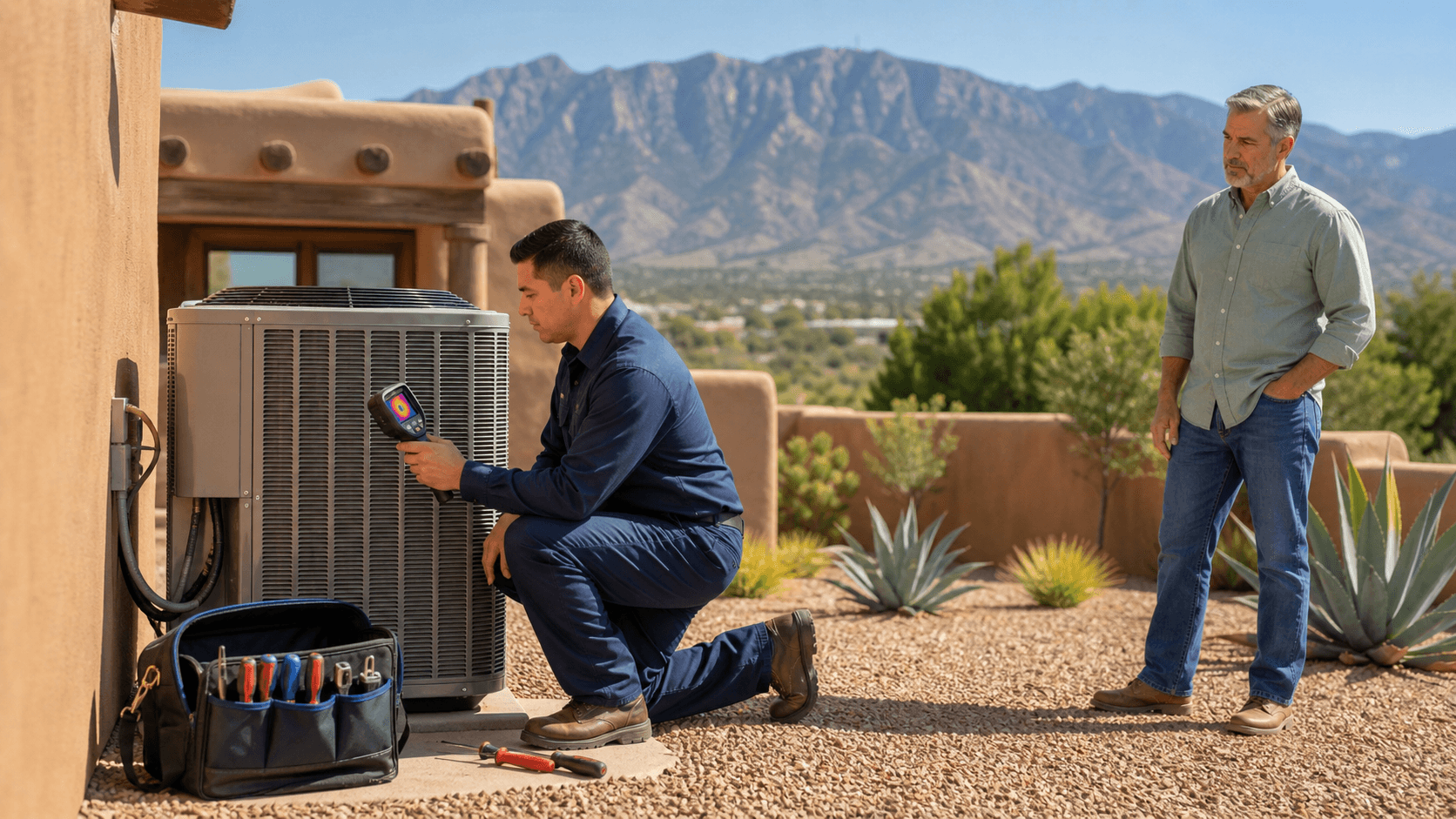
Seasonal cleaning and a detailed inspection by a professional can clear hidden dirt before it turns into a late-summer breakdown. A tech can safely open the system, clean coils, check airflow, and make sure your AC can breathe in our dusty climate.
Thermostat and Electrical Glitches That Mimic Bigger Problems
Not every cooling problem starts inside the main AC unit. A small issue with the thermostat or low-voltage wiring can make the whole system act up.
Common thermostat trouble includes:
- Old units with worn or miscalibrated sensors
- Thermostats placed in direct sun or near hot kitchens
- Settings that get changed by accident
- Weak or dead batteries in battery-powered models
These issues can cause short cycling, where the AC turns on and off often, or long run times that never seem to cool the house just right. That stops your home from feeling comfortable and also puts extra wear on compressors, fans, and contactors.
Loose low-voltage connections or small wiring problems can also:
- Make the system fail to start at random times
- Trip breakers again and again
- Cause the outdoor unit to run without the indoor fan or the other way around
To a homeowner, this can look like a major AC failure. Sometimes the fix is simple, but it still needs to be handled safely. Homeowners can do a quick check of thermostat batteries, settings, and the area around it, but any deeper electrical work should be done by a licensed technician. That way, small glitches are caught early before they damage expensive parts.
Swamp Cooler and AC Changeovers That Strain Your System
In Albuquerque, many homes started with swamp coolers and later switched to refrigerated air. Some homes still have both and change between them as seasons shift. If that changeover is not done correctly, it can quietly strain your AC.
Problems we often see include:
- Swamp cooler vents left open or not fully sealed
- Old ducts and dampers that leak hot attic air into the system
- Poorly capped water lines from past swamp coolers
- Gaps where new ductwork ties into old runs
Any of these can let hot or humid air into your cooling system. Your AC then has to work much harder to bring the house down to temperature. You might notice certain rooms that never cool well, higher indoor humidity, or a unit that runs nonstop on hot days.
Some refrigerated air conversions done without full planning can also lead to:
- Undersized AC units that are always struggling
- Duct layouts that starve some rooms of air
- Electrical circuits that trip under AC load
A professional evaluation of your current AC, any remaining swamp cooler equipment, and your ductwork before peak heat can clear up these hidden stress points. Fixing airflow and sealing things up helps your system run smoother and last longer.
Plumbing and Drain Problems That Quietly Damage Your AC
Your AC system and your plumbing might not seem related, but they are connected through drains. When your AC runs, it pulls moisture out of the air and sends that water into a drain pan and condensate line.
If that line clogs or the drain pan cracks, you can see:
- Water around the indoor unit
- Damp spots on ceilings or walls near the air handler
- A float switch shutting the system off to prevent overflow
In New Mexico, mineral-rich water and warm conditions can speed up algae and scale buildup in drain lines. That sticky layer catches dust and lint, and before long, the line is blocked. If the system keeps running, water can back up into the unit, cause rust, and even help mold grow in dark, damp spaces.
Sometimes these condensate drains tie into other plumbing lines. If there is an issue there, it can send sewer odors or backup moisture toward your AC equipment. That is one more reason drain lines need regular attention.
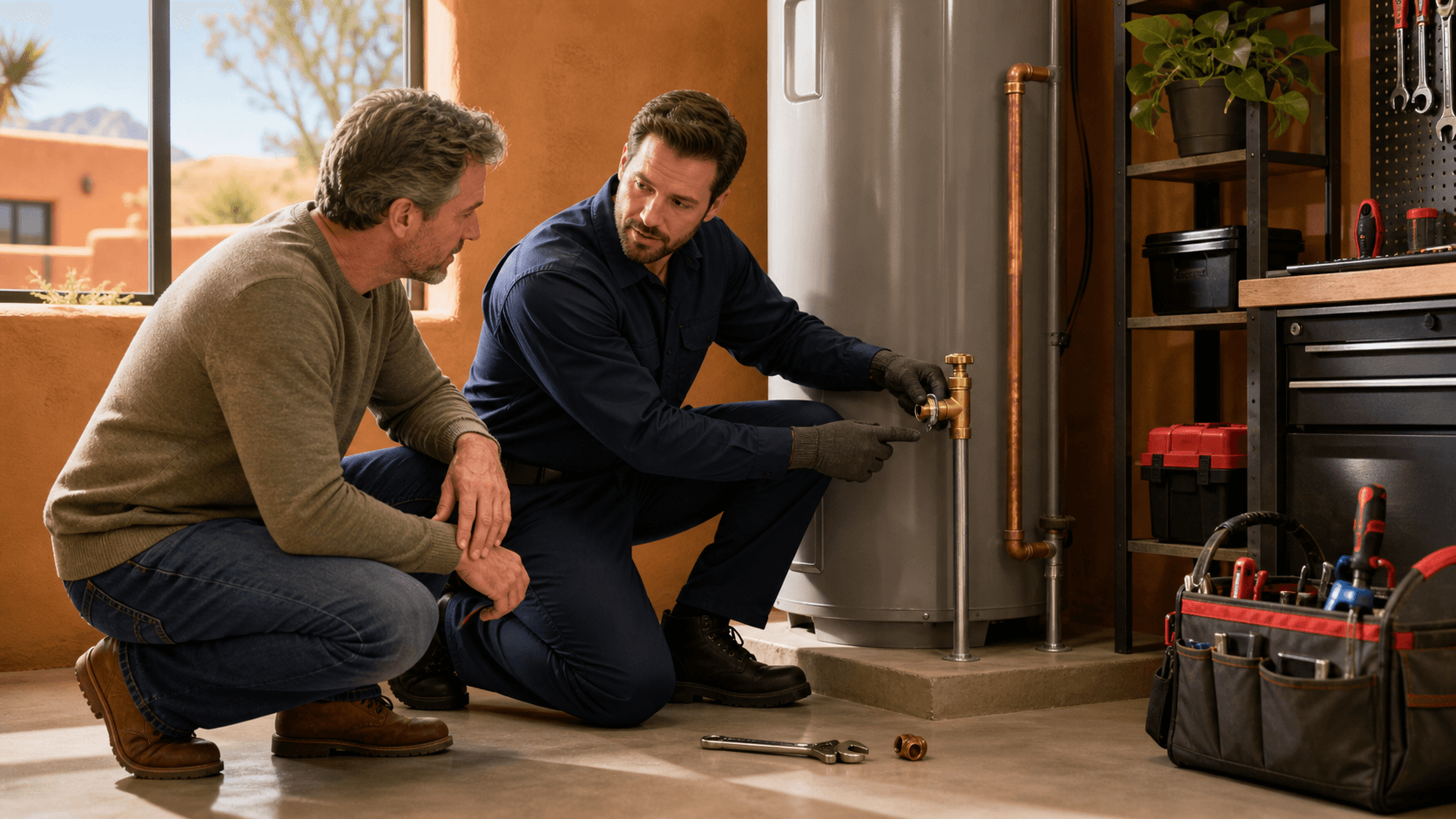
A team that works with both HVAC and plumbing is in a good spot to spot these problems early. During a checkup, they can flush the drain line, inspect pans and traps, and look for signs that plumbing is affecting your AC performance.
Late-Summer Maintenance Moves to Avoid Surprise Breakdowns
By the time late August rolls around, your AC has already done a lot of work. This is when small, overlooked issues are most likely to turn into surprise breakdowns.
The main hidden triggers to watch out for are:
- Dust, pollen, and debris around coils, fans, and filters
- Thermostat placement, settings, and wiring glitches
- Old swamp cooler openings, dampers, and duct problems
- Condensate drain clogs, leaks, and related plumbing issues
A simple end-of-season checklist for homeowners can include:
- Look around the outdoor unit and gently clear away weeds, trash, and loose debris
- Check air filters and replace if they look dirty or gray
- Glance at ceilings and floors near the indoor unit for any sign of moisture
- Confirm thermostat settings, update the schedule, and replace batteries if needed
- Listen for any new rattles, squeals, or buzzing from the system
From there, a late-summer tune-up by an experienced local HVAC and plumbing company can go much deeper. A pro can clean inside components, test electrical parts, confirm refrigerant levels, inspect swamp cooler changeovers, and clear condensate drains. That kind of visit helps you finish the season strong and gives you confidence that your cooling system will be ready the next time the heat hits.
Restore Comfort With Fast, Reliable AC Service Today
If your system is struggling to keep up with the Albuquerque heat, we are ready to help get your home comfortable again. Our experienced technicians provide thorough diagnostics and quality AC repair in Albuquerque so you can feel confident in your cooling system. Reach out to Perry Mechanical today to schedule service or ask questions about your specific issue, and we will respond promptly. If you prefer, you can also contact us to request an appointment that fits your schedule.