Stop Sweating It Out: Smart Choices for AC Emergencies
When your AC quits during an August heatwave in Albuquerque, it is more than annoying. It is hot, it is stressful, and it often feels a little scary. Indoor temperatures can climb fast, which is tough on kids, pets, and older adults, and it can disrupt both home and business life.
In that moment, one big question comes up: do you approve an emergency AC repair in Albuquerque right now, or is this the sign that it is finally time to replace the system? The choice affects your comfort, your budget, and your energy bills for years. As a local HVAC and plumbing company serving Albuquerque, Rio Rancho, and Los Lunas, we see these situations every summer. We understand the desert heat, local utility costs, and the common problems that show up when AC systems are pushed to the limit. Here, we will walk through practical rules of thumb, so you can decide when repair makes sense and when replacement is the smarter long-term move.
The True Cost of Emergency AC Repair in Albuquerque
When an AC fails on a hot afternoon or late at night, the first costs you notice are the obvious ones. Emergency service often includes extra fees because the visit is urgent or after normal business hours. There can also be a diagnostic charge to find the problem before any fix can begin. On top of that, the price of parts and refrigerant can rise during a heavy heatwave when demand is high.
Typical visible cost factors include things like:
- After-hours or weekend service fees
- Diagnostic and inspection time
- Common parts such as capacitors, fan motors, or contactors
- Refrigerant for systems that are low due to leaks
Then there are the hidden costs. These do not show up on the invoice but still hit your wallet. If your older AC needs repeated service calls each summer, you lose work time or have to close early if you own a small business. A tired system can run longer to cool the same space, which adds to your electric bill. Uncomfortable rooms can also affect sleep, mood, and productivity for everyone in the building.
One simple way to think about cost versus life left in the system is the 5,000 rule. Multiply the age of your AC by the estimated repair cost. If that number is at or above 5,000, replacement usually deserves a serious look. For example, a larger repair on an older unit often pushes that total high enough that you are putting too much money into equipment that is already near the end of its expected life.
For commercial properties, the stakes can be even higher. Poor cooling can lead to unhappy tenants, lost customers, product damage, and safety concerns. In those cases, faster and more reliable cooling can easily be worth more than stretching an old AC through one more season.
Repair or Replace Thresholds: Age, SEER, and Efficiency
Age plays a big role in the repair or replace decision. While every system is different, a few general guidelines help.
- Under 8 years old: Most of the time, repair is the better choice, especially if the unit has had regular maintenance and this is a rare problem.
- Around 8 to 12 years: It depends on the size of the repair and how efficient the system is. At this stage, large repairs can be harder to justify.
- Around 13 years or older: Replacement often starts to look smarter, especially if you have had more than one breakdown recently.
Efficiency matters too, and that is where SEER ratings come in. SEER is like miles per gallon for your AC. Older units often have SEER ratings in the 10 to 13 range. Newer systems can be much higher, which means they use less electricity to deliver the same cooling. In Albuquerque, where cooling season is long and the sun is intense, that difference can show up clearly on your power bill.
You can do a simple payback estimate by comparing two things:
- The extra cost of a new, high-efficiency system compared to staying with an older style unit
- The monthly savings you might see on your electric bill with higher SEER equipment
If the energy savings add up to cover the added cost in a reasonable time, the replacement starts to look like a smart investment, especially if you are deciding during peak cooling season.
Also watch for performance warning signs that lean toward replacement:
- Uneven cooling in different rooms
- Very long run times where the AC seems like it never shuts off
- Loud or strange noises from the outdoor or indoor unit
- Frequent emergency visits for what seem like minor issues
When these patterns keep showing up, repairs can feel like short-term patches instead of real solutions.
Refrigerant Type and Upcoming Phaseouts
Refrigerant is the lifeblood of your AC system, and the type your unit uses can change the repair math. Many older systems run on R-22 refrigerant, while newer ones use R-410A or other updated blends. R-22 has been phased out, which means it is not produced the way it used to be and is much harder to find.
Because of that phaseout, topping off R-22 can be very expensive. If you have an R-22 system that needs a big leak repair, a new coil, or a compressor, that major cost is often hard to justify. You are likely investing in equipment that is already outdated, with refrigerant that will only get more limited and costly over time.
A few simple rules help:
- If your system uses R-22 and needs a major leak fix or compressor, replacement is usually worth serious thought.
- If your system uses R-22 and only needs a very small repair that does not involve refrigerant, you might choose to repair, but understand it is a short-term move.
- If your system uses R-410A and is not too old, targeted repairs can still make a lot of sense.
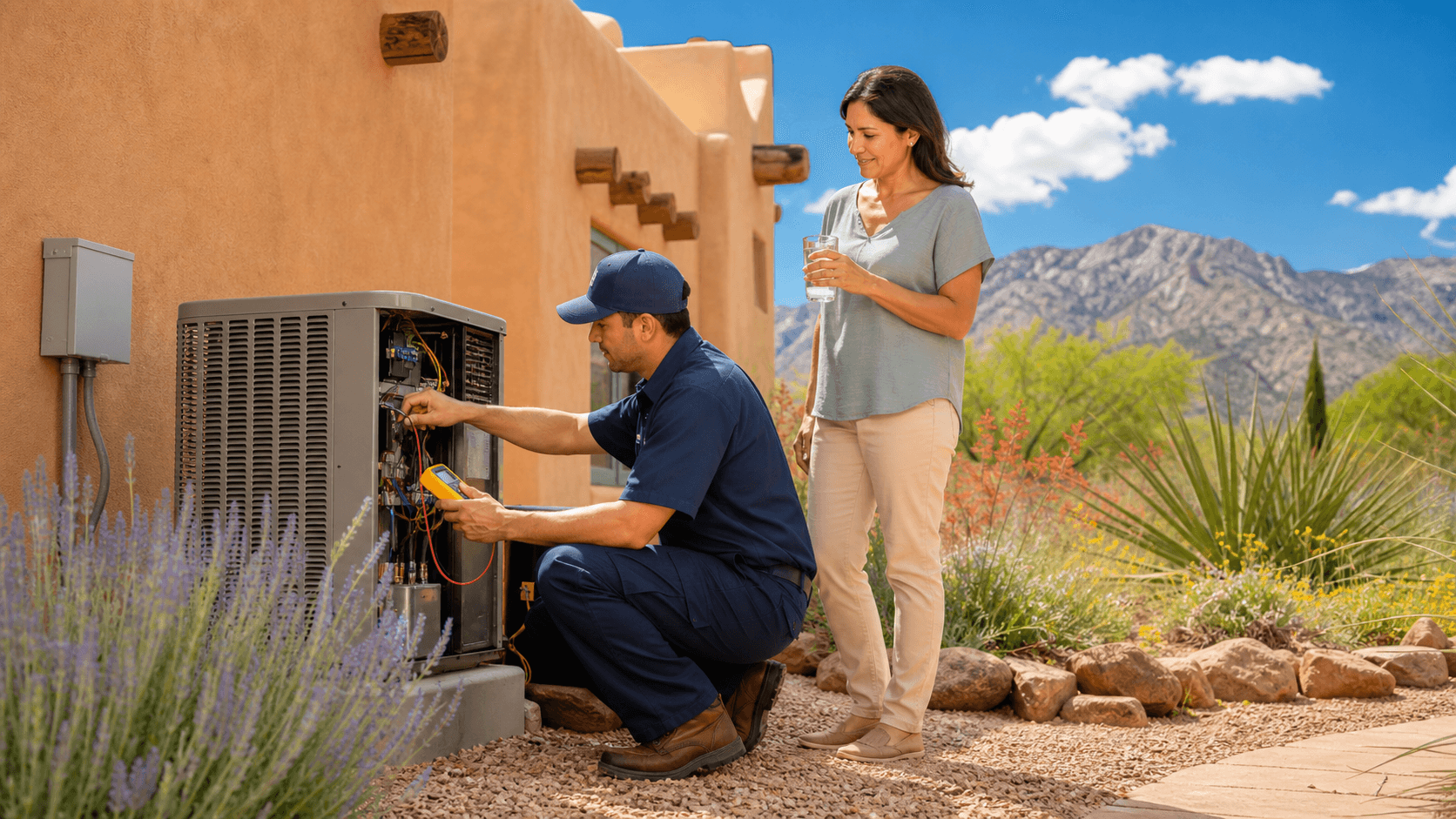
During an emergency AC repair in Albuquerque, a technician can quickly tell you which refrigerant you have and explain what that means for future costs and options.
Timing, Rebates, and Seasonal Incentives in New Mexico
Timing also affects what you pay and how much pressure you feel while deciding. August is a busy month for cooling calls in New Mexico. Emergency work can be harder to schedule, and you may see higher costs for urgent visits. At the same time, this is often when utilities or manufacturers offer rebates or specials on high-efficiency systems to encourage upgrades during hot weather.
There are timing choices to weigh:
- Approving after-hours work right away, which can restore cooling fast but may cost more
- Arranging a prompt but non-emergency installation the next day or soon after, possibly with lower overall cost
- Using temporary cooling options while you take a day to compare repair and replacement choices
In the Albuquerque area, you may see incentives for systems that meet certain SEER ratings, brand discounts, or possible tax credits for qualifying equipment. These can help offset part of the upfront cost of a new system.
Even if you decide on a repair now, it can be smart to start planning ahead. Use the emergency as a warning sign. Begin getting estimates for replacement before the next cooling season so you are not forced into another rushed decision during the next big heatwave.
How Perry Mechanical Helps You Decide with Confidence
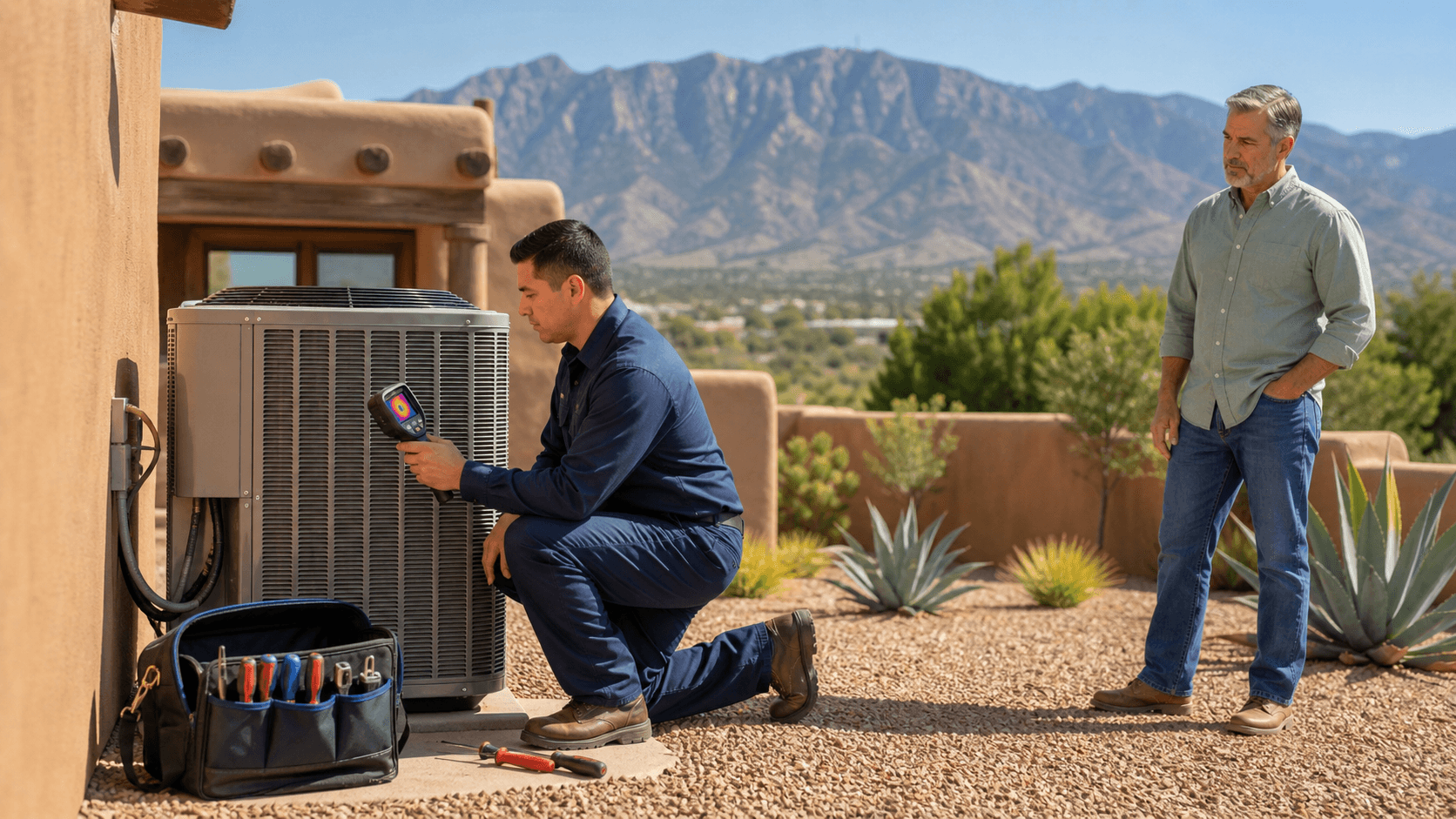
When we respond to an emergency AC repair in Albuquerque, Rio Rancho, or Los Lunas, our first step is a clear system assessment. We look at the age, condition, refrigerant type, and the specific problem causing the breakdown. Then we explain what we find in simple terms, so you understand what is going on inside your equipment.
From there, we discuss your options. That usually includes:
- A straightforward repair estimate
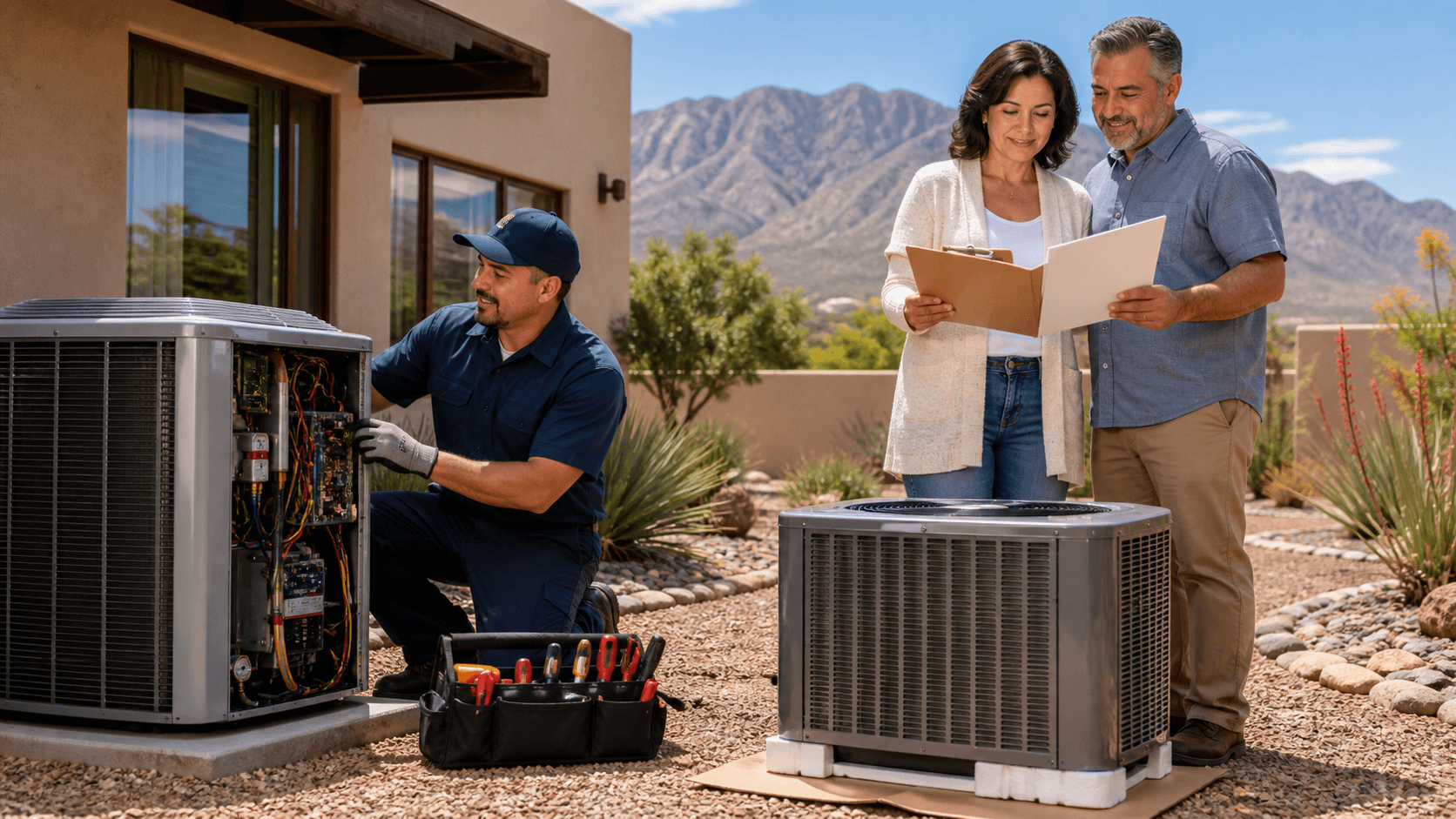
- A replacement option, if it makes sense, with details on equipment choices
- A side-by-side look at short-term and long-term costs, including efficiency differences
We aim for transparent pricing and help you weigh things like warranties, expected system life, and comfort improvements. Financing options may be available, which can turn what feels like a big jump into manageable monthly payments.
One of the best ways to avoid that August panic is to pay attention to early warning signs. Short cycling, warm air from the vents, new noises, or a sudden rise in your electric bill are all hints that your AC needs attention. Having a professional look at the system at the first sign of trouble can often prevent a full breakdown when the desert heat is at its worst.
Restore Comfort To Your Home Fast
When your AC fails unexpectedly, you need a team that can respond quickly and fix the problem correctly the first time. At Perry Mechanical, we provide reliable emergency AC repair in Albuquerque so your home can stay safe and comfortable. If you are experiencing an AC issue right now, contact us and we will get you scheduled as soon as possible.