In Albuquerque, summer does not arrive quietly. It comes quickly and brings serious heat, especially for businesses relying on a steady indoor climate. When temperatures climb in June and stay high through August, air conditioning becomes more than just a comfort; it is a necessity for running a business smoothly. That is when the load on commercial HVAC systems really starts to shift.
Understanding how these load changes occur can help avoid mid-season problems and keep things running smoothly. For those managing commercial HVAC in Albuquerque, knowing when and why systems are pushed to their limits contributes to keeping people comfortable and business operations on track.
Understanding HVAC Load Basics
The term "HVAC load" might sound technical, but it refers to how much heating or cooling a building needs. A small, quiet office might have a very different load than a busy restaurant kitchen. The type of space matters, and so does what is happening inside it.
There are two main types of load to know about:
- Base load is what the system needs to maintain a steady temperature when conditions are fairly stable, like early morning before the building heats up.
- Peak load is what happens when demand jumps, usually on hot afternoons when the sun is strong, and more people are inside producing heat.
Keeping the load balanced makes it easier for systems to operate without excessive strain. When everything runs within a normal range, the HVAC unit does not have to struggle to keep up, resulting in less wear and fewer problems over time.
Why HVAC Loads Change in Summer
Each year, as temperatures rise, the demand for cooling systems also increases. This part is expected, but the reasons go beyond the temperature on a weather report.
A few reasons why load changes in summer are especially noticeable:
- Higher outdoor air temperatures bring a constant source of heat into the building.
- Longer daylight hours and more sunshine create additional radiant heat, particularly in buildings with many windows.
- Greater foot traffic, longer operating hours, and heat generated from tools or kitchen equipment contribute to the internal load.
In Albuquerque, the dry desert air speeds up this process. While humidity may not be an issue, the air becomes hot rapidly and remains that way for hours. When the sun intensifies in the middle of the day, it is easy for indoor spaces to fall behind if the system is not in top condition.
Signs Your System Might Be Overloaded
Recognizing when something is wrong with your HVAC system does not require expert knowledge. Often, the first signs of strain are obvious when walking into a room.
Here are a few red flags indicating that the system may be struggling:
- Uneven temperatures around the building, particularly in areas that feel hot or stale.
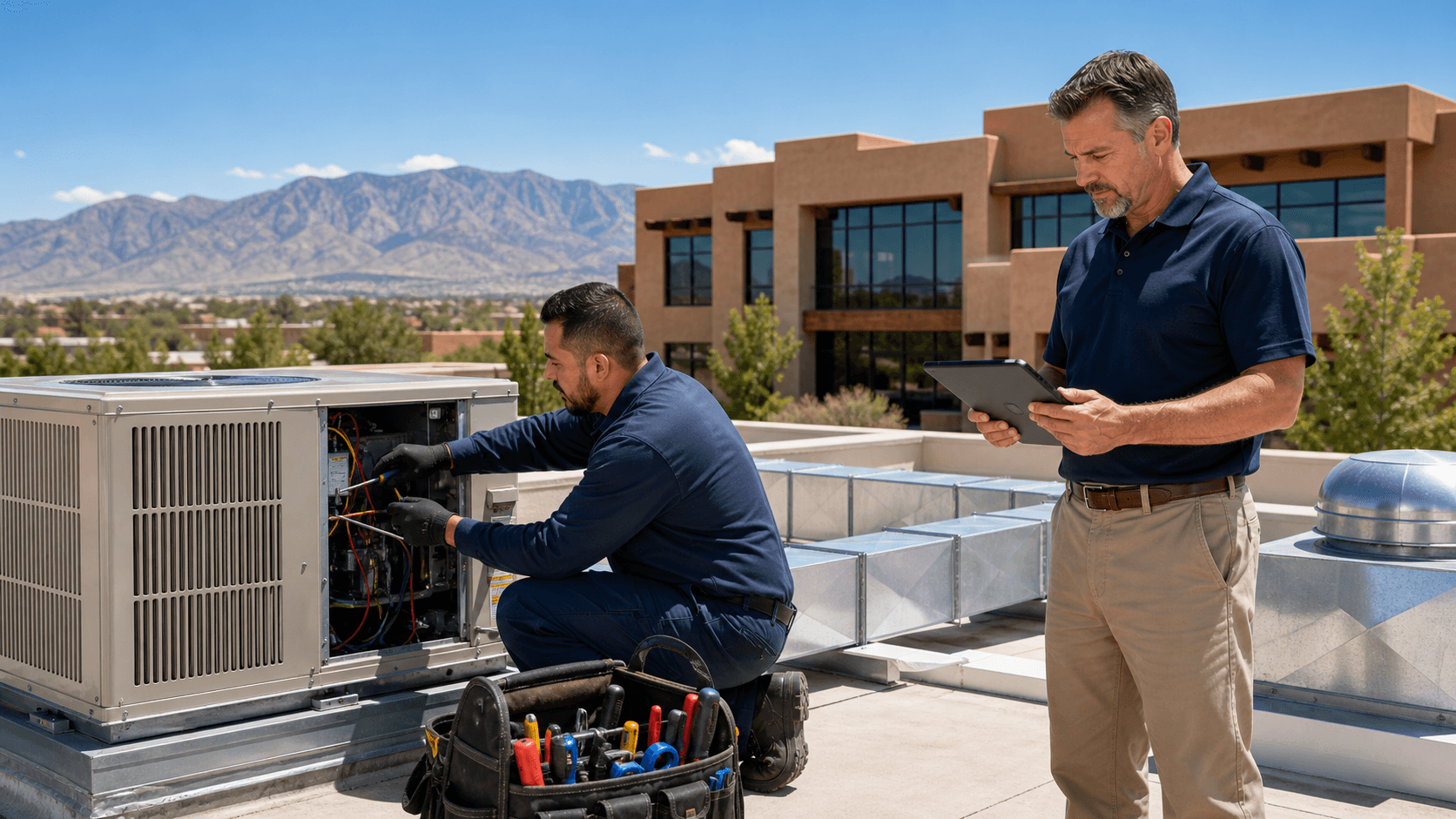
- Loud or unusual sounds coming from vents or rooftop units.
- Higher energy bills without any change in building activity.
- Systems cycling on and off more frequently than usual, a pattern known as short cycling.
These problems are common during summer heatwaves when the system operates near full capacity throughout the day. These early warning signs can escalate into bigger issues if the root cause, often an overloaded system, is not addressed.
Smart Ways to Manage Peak Season Demand
Keeping a building cool during peak summer heat requires more than increasing the thermostat setting. Minor adjustments can have a significant impact by reducing the pressure on the HVAC system.
A few effective ways to manage higher demand include:
- Setting up zoning so different areas receive appropriate levels of cooling based on usage.
- Upgrading or replacing thermostats to allow easier adjustments and improved scheduling.
- Keeping vents and filters clean to help airflow remain unrestricted.
- Sealing entry points such as windows, doors, and ducts to prevent heat from entering and cool air from escaping.
Routine inspections during the cooling season help address small issues before they become major problems. When the hottest months are underway, preventive measures become even more valuable.
Planning Ahead with Professional Help
Being proactive is preferable to responding to emergencies when managing commercial HVAC. Scheduling maintenance and inspections before extreme temperatures arrive is a practical step. Around late May or early June, arranging a system review can help prepare for the increased load.
Professionals check to see if the cooling system is ready for real-world summer conditions instead of milder days earlier in the year. This is particularly important for commercial HVAC in Albuquerque, where intense, dry heat can quickly disrupt indoor comfort.
Even if the system appears to be operating well in early summer, preventative action reduces the risk of breakdowns during busy times when the system is running nonstop.
Keep Your System Ready When the Heat Hits
Summer HVAC challenges usually develop over time, but can become obvious suddenly. Monitoring load changes during the peak season is a proactive way to maintain comfort and reliable operations.
When you know how summer impacts your system and watch for early warning signs, it is much easier to keep people comfortable and business uninterrupted. If your system works harder than it should once the heat intensifies, extra pressure can lead to more than increased discomfort; it can disrupt your entire day. Taking precautions now is a wise move when July arrives and the demand for cool air increases.
If you notice your HVAC system is working harder in the summer or want to avoid cooling issues as the season progresses, it is time to act. Managing indoor comfort in hot, dry conditions requires planning, especially for larger buildings or busy spaces. Our team has spent years helping businesses adapt to seasonal changes with commercial HVAC in Albuquerque, and we know what it takes to keep your cooling system steady during extended hot weather. At Perry Mechanical, we welcome your call to make sure your system is prepared for the months ahead.